
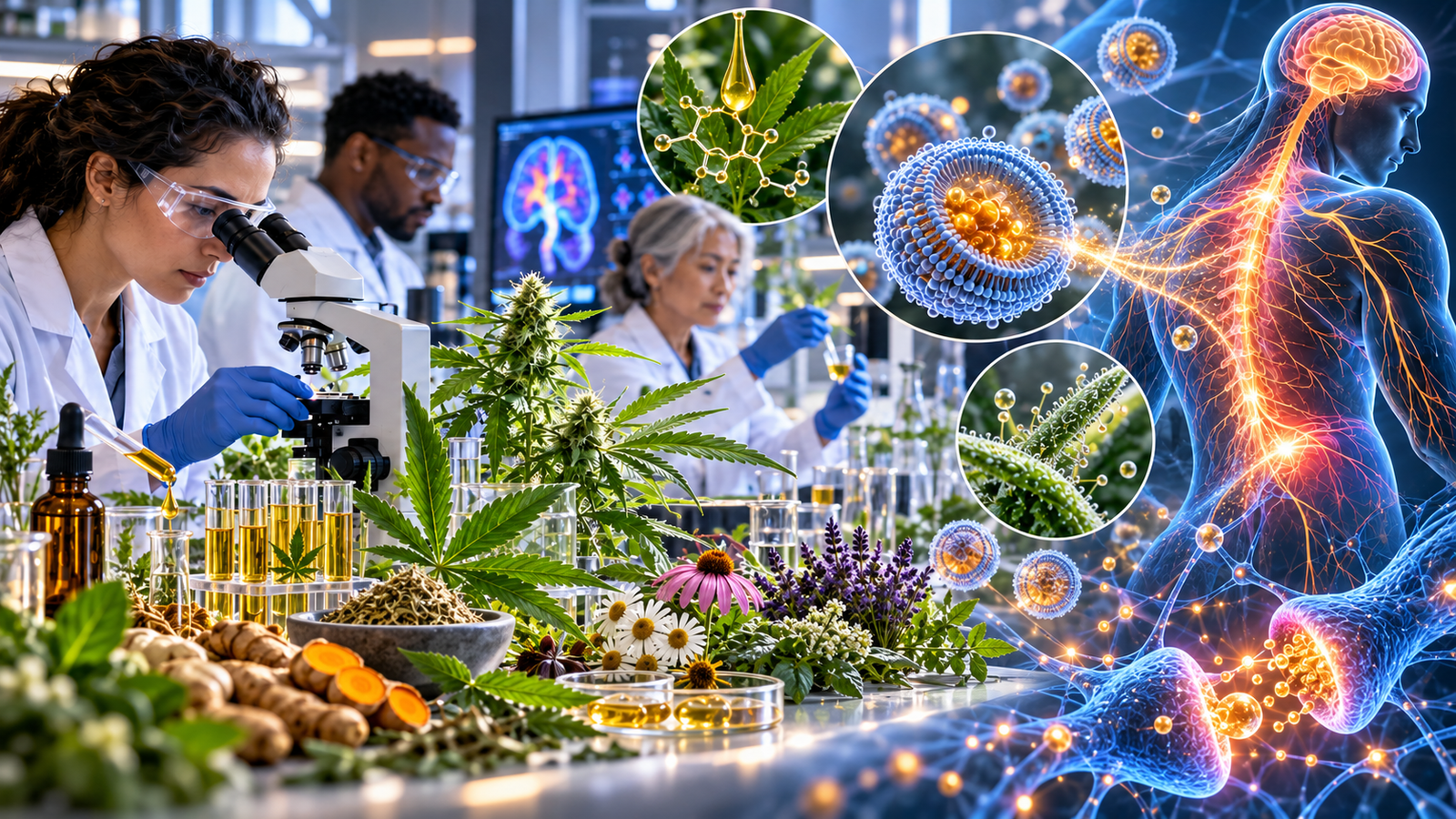
Plant Medicine for Neuropathic Pain: Why Phytochemicals, Cannabinoids, and Nanotechnology Are Converging
Neuropathic pain is not simply ordinary pain that happens to last longer. It develops when nerves, the spinal cord, the brain, or the biological systems controlling sensory signaling begin processing information differently. That distinction matters because treating the symptom of pain is not necessarily the same thing as addressing the biological processes keeping that pain signal active.
A major review published October 20, 2026, in the International Journal of Pharmacology examines medicinal plants and phytochemicals through that much broader lens. Instead of asking whether one plant compound can shut down one pain pathway, the researchers looked across neuroinflammation, oxidative stress, mitochondrial dysfunction, ion channels, glial activation, neurotransmission, and neuroimmune signaling. They conclude that plant-derived compounds may be particularly interesting because many interact with several of these pathways simultaneously [1].
That is an important shift in how plant medicine can be studied. Neuropathic pain is a multi-system problem, so it makes biological sense to investigate compounds that can influence more than one target. At the same time, the review exposes a second issue that may ultimately be just as important as identifying promising molecules: a compound cannot do much biologically if it is unstable, poorly absorbed, rapidly metabolized, inconsistently manufactured, or unable to reach the tissue where it is needed.
That is where phytochemistry, cannabinoid science, and advanced delivery technology begin to meet.
Neuropathic Pain Is a Network Problem
Neuropathic pain can occur with diabetic neuropathy, chemotherapy-induced peripheral neuropathy, spinal cord injury, postherpetic neuralgia, multiple sclerosis, traumatic nerve injuries, and numerous other disorders. Symptoms can include spontaneous burning or electrical pain, allodynia, where something normally harmless becomes painful, and hyperalgesia, where painful stimulation becomes disproportionately intense [1,2].
The review identifies several interacting biological processes behind those symptoms. Peripheral sensitization occurs when damaged nerves and surrounding immune activity release inflammatory molecules such as TNF-alpha and IL-1 beta. Ion channels including Nav1.7, Nav1.8, calcium channels, and members of the TRP family can become dysregulated, allowing sensory neurons to fire more easily than they should [1,2].
Central sensitization takes the problem farther upstream. Persistent signaling can change activity within the spinal cord and brain. Excitatory neurotransmission involving glutamate and substance P can increase while inhibitory signaling involving GABA and glycine may become less effective. Microglia and astrocytes can become activated and release additional inflammatory mediators that help maintain the pain response [1,3].
Oxidative stress adds another layer. Excess reactive oxygen species can damage mitochondria, alter cellular energy production, promote inflammatory signaling, and increase neuronal excitability. Pain can therefore become a self-reinforcing biological loop involving the nervous system, immune system, cellular metabolism, and inflammatory signaling [1].
This helps explain why a drug aimed at a single receptor may work well for one person, partially for another, and hardly at all for someone else. Neuropathic pain is not one switch that needs to be turned off. The review examined research published from approximately 2000 through 2026 using PubMed, MEDLINE, Scopus, Web of Science, ScienceDirect, Google Scholar, SpringerLink, and related scientific literature. Importantly, this was a narrative review, not a new human clinical trial or a formal meta-analysis.
That means its strength lies in connecting mechanisms and identifying promising directions, not proving that every compound discussed is an effective clinical treatment [1]. The authors themselves repeatedly acknowledge that distinction.
The Plant Molecules and the Endocannabinoid Connection
One of the paper’s strongest themes is polypharmacology. Plants contain molecules that can interact simultaneously with inflammatory signaling, oxidative stress pathways, ion channels, nuclear receptors, immune cells, and neurotransmitter systems.
The review identifies curcumin, quercetin, epigallocatechin gallate, rosmarinic acid, and withanolides among compounds with comparatively strong preclinical evidence. Curcumin, for example, has been investigated for regulation of NF-κB, TNF-α, IL-1β, oxidative stress, and microglial activation. Quercetin has antioxidant and anti-inflammatory signaling effects, while rosmarinic acid has been associated with modulation of oxidative stress and microglial activity [1].
Capsaicin offers one of the clearest examples of a plant molecule moving from mechanism to clinical application. Capsaicin activates TRPV1 receptors on sensory nerves, followed by receptor desensitization and reduced nociceptive signaling. High-concentration topical capsaicin has been studied in diabetic peripheral neuropathy, postherpetic neuralgia, and other neuropathic conditions [1,4].
Then we get into territory particularly important to cannabinoid researchers.
The review includes Cannabis sativa among plant sources with significant translational potential and specifically discusses CBD, THC, and CBG. It identifies cannabinoid receptor signaling, neurotransmitter regulation, ion channel activity, and neuroinflammation as mechanisms warranting continued investigation [1].
This distinction is important pharmacologically.
CBD should not simply be described as another compound that directly activates CB1 and CB2 the way THC does. CBD has relatively low orthosteric affinity for classical cannabinoid receptors and appears to influence cannabinoid signaling through much more complicated direct and indirect mechanisms. Research describes interactions involving CB1 allosteric modulation, TRPV1 activation followed by desensitization, GPR55, serotonin receptors, PPAR signaling, ion channels, and mechanisms that can affect endocannabinoid tone [5,6].
That distinction becomes extremely important when discussing neuropathic pain because the Endocannabinoid System does much more than control whether someone feels the effects of THC. It also helps regulate neuronal excitability, inflammatory responses, immune communication, stress signaling, and pain processing.
Preclinical research cited by the 2026 review found that CBD prevented the development of cold and mechanical allodynia in a mouse model of paclitaxel-induced neuropathy [7]. That finding is interesting, particularly for chemotherapy-induced peripheral neuropathy, but it remains an animal study.
Human evidence is much more complicated.
A 2026 Cochrane review examining 21 clinical trials involving more than 2,100 adults concluded that current evidence remains insufficient to establish clear overall benefits of cannabis based medicines for chronic neuropathic pain. Some measures suggested that a greater percentage of participants receiving cannabinoid products achieved at least 30 percent pain reduction, but certainty differed substantially according to product type and outcome. Evidence for CBD-dominant products was considered particularly uncertain [8].
A separate 2026 systematic review focused specifically on chemotherapy-induced peripheral neuropathy identified only three completed randomized controlled trials involving 68 participants. Those trials examined nabiximols, oral CBD, and topical CBD, and none demonstrated a statistically significant improvement in pain or quality of life compared with placebo [9].
That doesn’t erase the cannabinoid mechanisms. It tells us something more useful. Mechanistic plausibility is not the same thing as demonstrated clinical efficacy.
The formulation, dose, route of administration, cannabinoid ratio, disease subtype, treatment duration, pharmacokinetics, and individual biology all matter. Saying “CBD works for neuropathy” is scientifically premature. Saying cannabinoids interact with multiple pathways involved in neuropathic pain and deserve far better controlled investigation is considerably more accurate.
Another molecule in this review deserves special attention from an ECS perspective: palmitoylethanolamide, or PEA. PEA is not a phytocannabinoid. It is an endogenous fatty acid ethanolamide often discussed within the broader endocannabinoidome. Its principal mechanisms include activation of PPAR alpha, mast cell modulation, neuroinflammatory regulation, and interactions with related lipid signaling networks [10,11].
A 2026 systematic review and meta-analysis specifically examining diabetic neuropathic pain included three studies totaling 188 participants. PEA was associated with reduced neuropathic pain scores. Still, the researchers emphasized substantial heterogeneity, small sample sizes, and frequent use of combination products, making PEA’s independent contribution difficult to determine [10].
That’s exactly the level of distinction cannabinoid and ECS research needs. The future probably won’t be explained by one cannabinoid, one receptor, or one mechanism. The more we study this system, the more obvious it becomes that cannabinoids, endocannabinoids, endocannabinoid-like lipids, TRP channels, PPAR receptors, inflammatory mediators, and numerous metabolic pathways communicate with each other.
Neuropathic pain provides an excellent example of why that broader systems approach matters.
The Delivery Problem May Be as Important as the Molecule
This is where the review becomes especially relevant to Nanobles. Identifying a molecule with interesting activity in a laboratory does not mean researchers automatically have a useful therapeutic agent. Curcumin is a classic example. It has impressive mechanistic research behind it, including inflammatory, antioxidant, and neuroimmune activity. Yet curcumin also has poor aqueous solubility, limited oral bioavailability, rapid metabolism, and extensive first pass processing [1,12].
 You can have a biologically impressive molecule in a capsule. Still, if very little reaches circulation or the target tissue in an active form, chemistry has already capped what that formulation can accomplish. The authors identify liposomes, nanoparticles, phospholipid complexes, and other advanced formulation systems as potential ways to improve the delivery of phytochemicals such as curcumin [1]. They also identify poor pharmacokinetics and bioavailability as major barriers preventing plant compounds from moving successfully from experimental models into clinical medicine.
This is one of the most important observations in the entire review – Nanotechnology should not be viewed simply as a way to make particles smaller.
The scientific question is whether a delivery system can meaningfully alter properties such as solubility, stability, dissolution, absorption, tissue exposure, cellular uptake, controlled release, or protection from premature degradation. Those measurements matter because nanotechnology cannot rescue a molecule that has no meaningful biological activity. What it can potentially do is remove some pharmacokinetic barriers that prevent a biologically active molecule from reaching its potential.
That distinction keeps nanoscience grounded.
The same issue applies to cannabinoids and terpenes. These are lipophilic compounds with formulation-dependent pharmacokinetics. Oral delivery exposes cannabinoids to gastrointestinal conditions and extensive first pass metabolism. Topical and transdermal systems face the skin’s barrier function. Inhalation avoids some gastrointestinal metabolism but introduces other variables involving heat, pulmonary delivery, rapid concentration changes, and dosing consistency.
No single delivery system is automatically best for every phytochemical. The carrier has to match the Molecule and the intended biological target. That’s why the next generation of plant medicine research cannot end with identifying compounds. Researchers must study the chemistry of how those compounds are stabilized, transported, absorbed, metabolized, and ultimately presented to biological systems.
For Nanobles, that is where the science becomes very interesting. The medicinal plant field has spent decades finding molecules, but next major challenge is learning how to deliver them predictably.
What This Research Shows and What Still Has to Be Proven
The strongest message from this review is not that medicinal plants have already solved neuropathic pain. The strongest message is that neuropathic pain involves multiple biological systems, and plant-derived molecules provide a large library of multi-target chemistry that can interact with many of those systems.
That’s worth investigating seriously.
The authors identify substantial preclinical evidence involving inflammation, oxidative stress, mitochondrial dysfunction, glial activation, ion channels, neuroimmune signaling, and neuronal protection. They also find limited but growing clinical evidence for compounds including capsaicin, PEA, curcumin, CBD, alpha-lipoic acid, Boswellia, ashwagandha, saffron, and other plant-derived substances [1].
But the limitations are equally important.
Many phytochemical studies are performed in rodents. Chronic constriction injury, spared nerve injury, and chemotherapy-induced neuropathy models provide valuable mechanistic information, but animals do not reproduce the full complexity of chronic human neuropathic disease. Human metabolism, genetics, medication use, disease duration, psychological stress, comorbid conditions, and individual differences in pain processing can dramatically affect outcomes [1].
 Standardization is another major obstacle. Two products with the same plant name may contain very different concentrations of active compounds depending on genetics, cultivation, harvesting, extraction, processing, storage, and manufacturing. If researchers cannot reproduce the chemistry, reproducing the biological result becomes much harder [1].
Safety cannot be ignored either.
“Natural” does not mean pharmacologically inactive. Plant compounds can affect cytochrome P450 enzymes, transport proteins, sedation, cardiovascular activity, liver function, and prescription-drug metabolism. The review specifically raises concerns about herb-drug interactions and emphasizes the need for pharmacokinetic testing, standardized composition, dosing research, and long-term safety evaluation [1].
This is where plant medicine matures. We don’t advance the field by pretending every positive rodent study proves a treatment works. We advance it by identifying mechanisms, reproducing chemistry, improving delivery, establishing pharmacokinetics, determining effective exposure, conducting controlled human trials, and learning which biological profiles respond. For cannabinoid science, the message is especially important.
The Endocannabinoid System sits in the middle of pain regulation, immune signaling, neuronal excitability, inflammatory responses, and homeostatic control, but it does not operate alone. TRP channels, PPAR receptors, cytokines, glial cells, oxidative pathways, mitochondrial function, neurotransmitters, endogenous lipids, and phytochemicals all cross into the same biological neighborhood.
That neighborhood is where much of the next generation of pain research is likely to happen. The 2026 review gives us another piece of the puzzle: plant medicine is increasingly being studied not simply as a collection of old remedies, but as complex molecular chemistry that can influence interconnected biological systems.
The next challenge is making that chemistry reproducible, measurable, deliverable, and clinically testable. That is where modern phytochemistry meets pharmaceutical science. And increasingly, nanotechnology enters the conversation.
Mike Robinson, Global Cannabinoid Research Center
Research review prepared for educational and scientific discussion. It is not intended as medical advice or as a claim that any compound discussed prevents, treats, or cures disease.
References
- Dwivedi S, Chaturvedi P, Koka SS, Jain VK, Sharma PK, Darwhekar GN. Medicinal Plants and Phytochemicals in Neuropathic Pain: Mechanistic Insights and Therapeutic Potential. International Journal of Pharmacology. 2026;22(6):55031. doi: 10.31083/IJP55031.
- Finnerup NB, Kuner R, Jensen TS. Neuropathic Pain: From Mechanisms to Treatment. Physiological Reviews. 2021;101:259-301. doi: 10.1152/physrev.00045.2019.
- Ji RR, Nackley A, Huh Y, Terrando N, Maixner W. Neuroinflammation and Central Sensitization in Chronic and Widespread Pain. Anesthesiology. 2018;129:343-366. doi: 10.1097/ALN.0000000000002130.
- Simpson DM, Robinson Papp J, Van J, et al. Capsaicin 8% Patch in Painful Diabetic Peripheral Neuropathy: A Randomized, Double Blind, Placebo-Controlled Study. Journal of Pain. 2017;18:42-53. doi: 10.1016/j.jpain.2016.09.008.
- Roohbakhsh A, et al. Pharmacological effects of cannabidiol by transient receptor potential channels. Life Sciences. 2022;300:120582. doi: 10.1016/j.lfs.2022.120582.
- Peng J, Fan M, An C, Ni F, Huang W, Luo J. A narrative review of the molecular mechanism and therapeutic effect of cannabidiol. Basic and Clinical Pharmacology and Toxicology. 2022;130:439-456. doi: 10.1111/bcpt.13710.
- Ward SJ, Ramirez MD, Neelakantan H, Walker EA. Cannabidiol prevents the development of cold and mechanical allodynia in paclitaxel-treated female C57Bl6 mice. Anesthesia and Analgesia. 2011;113:947-950. doi: 10.1213/ANE.0b013e3182283486.
- Ateş G, Welsch P, Klose P, Phillips T, Lambers B, Häuser W, Radbruch L. Cannabis based medicines for chronic neuropathic pain in adults. Cochrane Database of Systematic Reviews. 2026; Issue 1. doi: 10.1002/14651858.CD012182.pub3.
- Cannabinoids in the Treatment of Chemotherapy-Induced Peripheral Neuropathy: A Systematic Review of Randomized Controlled Trials. 2026. The review identified three completed randomized controlled trials involving 68 participants and concluded that current evidence is insufficient to support routine cannabinoid use for chemotherapy-induced peripheral neuropathy.
- Prado MB Jr, Nisce NRB, Cayanong EJB, Adiao KJB. Efficacy, safety, and tolerability of palmitoylethanolamide in the management of diabetic neuropathic pain: a systematic review and meta-analysis. Journal of Diabetes and Metabolic Disorders. 2026;25(1):52. doi: 10.1007/s40200-026-01888-6.
- Scuteri D, Guida F, Boccella S, et al. Effects of Palmitoylethanolamide on Nociceptive, Musculoskeletal and Neuropathic Pain: Systematic Review and Meta-Analysis of Clinical Evidence. Pharmaceutics. 2022;14:1672. doi: 10.3390/pharmaceutics14081672.
- Basnet P, Skalko Basnet N. Curcumin: an anti-inflammatory molecule from a curry spice on the path to cancer treatment. Molecules. 2011;16:4567-4598. doi: 10.3390/molecules16064567.
Share It:
Tags:
Suppressing Colon Cancer Development With Nanotechnology: A Plant-Mediated Approach Under Investigation

Leave A Comment